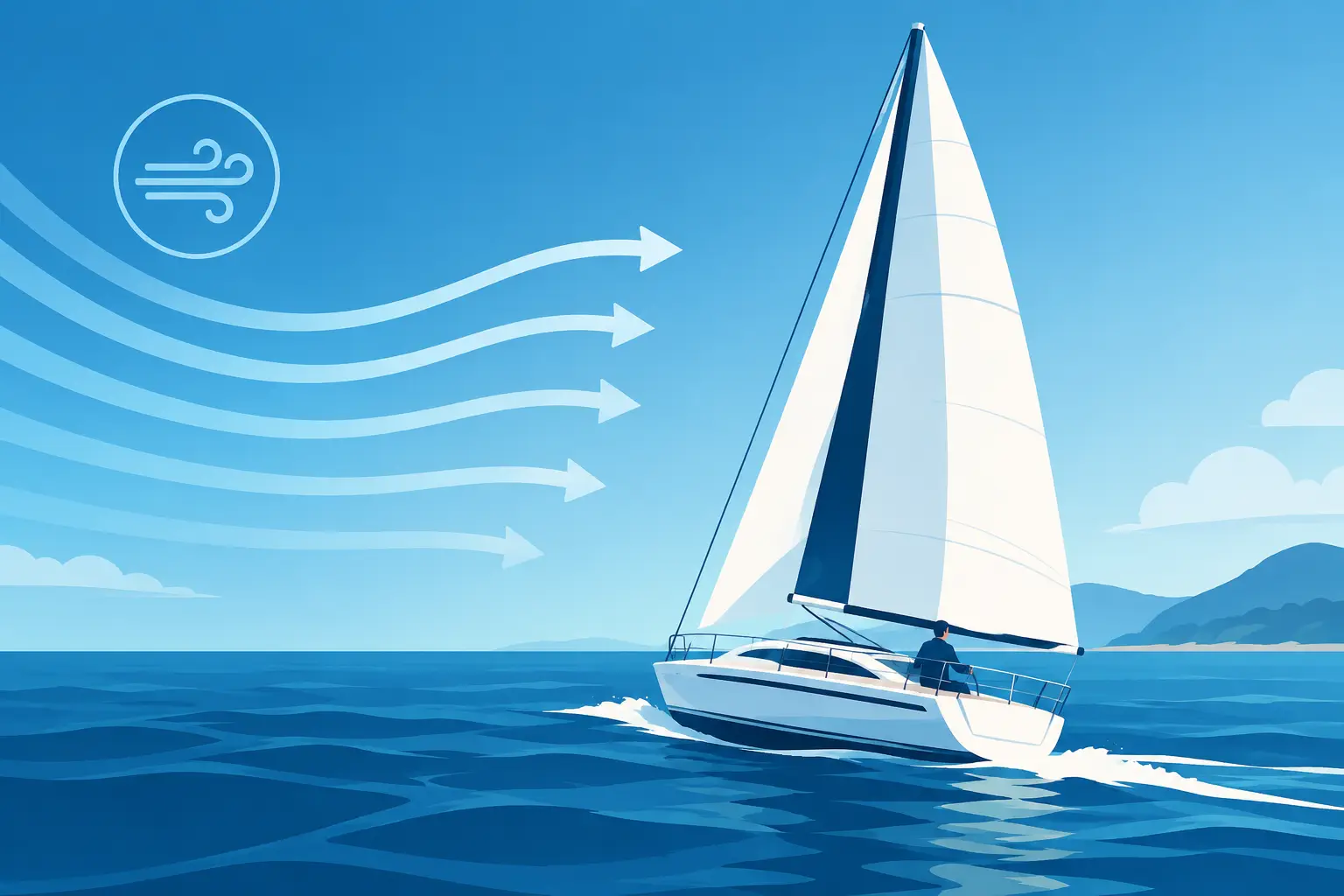
The water looks calm, but within seconds the boat accelerates, heels and asks for the sail to be eased. That is when a good wind strength guide stops being theory: it helps you understand what is happening, anticipate how the sailboat will react and adjust before you lose speed or control.
Wind strength is not just a number in a forecast app. It changes the pressure in the sails, the heel angle, the response of the rudder, the way waves build and even the best strategy for a race. Learn to read these signs and you stop merely reacting to the boat and start actually sailing it.
What wind strength measures in sailing
In practice, wind strength is wind speed. It is usually given in knots, abbreviated kt or kn. One knot equals 1.852 km/h, but there is no point doing the math while you are sailing. What matters is building a frame of reference: a few knots barely fill the sail; medium wind puts the boat to work; strong wind demands quick trim, good body position and a safety margin.
The Beaufort scale is also used to describe wind intensity by its visible effects on the water and the surroundings. It is useful because you will not always have an instrument on board. If the surface is glassy, if whitecaps appear or if the trees on shore are swaying hard, you already have enough clues to make better decisions.
But be careful: two winds with the same speed can feel completely different. A steady 12-knot wind is easier to sail in than a 12-knot wind with gusts to 18 and frequent shifts. The number tells you the average intensity. Experience comes from noticing how that intensity reaches the boat.
Wind strength guide by knot range
Use these ranges as a starting point for reading the water, trimming the sails and deciding how hard to push the sailboat. The exact behavior changes with the type of boat, crew weight, sail area and sea state.
- 0 to 3 knots - light air: the sail tends to lose its shape and the boat responds slowly. Keep your rudder movements smooth and the sails full, without over-trimming. Any abrupt maneuver kills what little speed you have.
- 4 to 6 knots - light breeze: you can start building speed, especially in flat water. Trim the sail precisely and look for a clear lane, because sailing in another boat's dirty air costs a lot.
- 7 to 10 knots - moderate breeze: this is a great range for feeling the acceleration and practicing trim. The boat starts to heel noticeably, and small changes to the sheet have an immediate effect.
- 11 to 16 knots - fresh breeze: gusts start to matter a lot. Move your weight to windward, keep the boat balanced and be ready to ease the sail when the pressure builds.
- 17 to 21 knots - strong wind: the priority is no longer simply trimming in. Control the heel, depower when necessary and start your maneuvers early. Small mistakes get big fast.
- Above 22 knots - demanding conditions: sailing calls for technique, proper equipment and a responsible assessment of local conditions. On real boats, respect the limits of the vessel and the crew, and follow safety guidance.
These ranges are not set in stone. A light sailboat can feel lively and twitchy in 15 knots, while a larger vessel may sail comfortably in the same conditions. The key is to notice whether the boat is turning wind into speed or just slipping sideways, heeling too much and fighting the rudder.
True wind, apparent wind and how it feels in the cockpit
True wind is the wind blowing over the water, coming from a defined direction. By contrast, apparent wind is the wind you feel on board when the true wind is combined with the boat's own motion. The faster the sailboat goes, the more the apparent wind tends to move forward toward the bow and increase in strength.
That is why, when you are sailing close-hauled and doing it well, the wind can seem to have picked up even though the forecast has not changed. Often the boat has simply gained speed and created more apparent wind. The answer is not to look only at the intensity: watch the sail. If it is overloaded, the boat is heeling and the helm feels heavy, it is time to depower.
Downwind, the picture changes. The apparent wind drops and comes from further aft, so the sails need to be eased out. Anyone who keeps the sail trimmed in as if still close-hauled wastes sail area and slows the boat down. Change course, read the signs and adjust the sheets.
Gusts: when the average wind is misleading
A gust is a quick, temporary increase in wind speed. It can bring a few extra knots, upset the balance of the boat and demand action before you have even confirmed the number on the display. On the water, a dark patch moving toward you usually gives away more pressure on its way.
On a beam reach or close-hauled, the first response is usually to keep the boat flat. Put your weight to windward, correct your course gently and, if the pressure is still too much, ease the sail a little. Easing is not giving up on speed. It keeps the hull from heeling too far, the rudder from acting as a brake and the boat from losing efficiency.
When the gust passes, bring the trim back gradually. If you leave the sail eased for too long, you lose speed; if you trim it all in at once, you can make the boat heel over again. Sailing well is keeping up this ongoing conversation between pressure, balance and acceleration.
In a race, a gust is also an opportunity. If it reaches your boat before your rivals, you can gain valuable meters. Anticipate its arrival from the texture of the water, keep room to accelerate and avoid starting a decisive maneuver at the moment the boat is most loaded.
Wind strength changes sail trim
In light wind, the goal is to generate power. The sails need to work with depth and without excessive tension. Over-trimming chokes the airflow and can leave the boat lifeless. Make small adjustments and give the hull time to respond.
In medium wind, look for a balance between power and pointing. The mainsail and the genoa need to be at the right angle to the wind, with clean flow and controlled heel. If the boat is fast but keeps wandering off course, you may have too much power or be asking too much of the rudder.
In strong wind, the goal is to shed the force that does not turn into speed. Flatten the sail when your controls allow it, use twist to depower the upper part and be ready to ease in the gusts. A flat hull usually sails faster than one that is heeling excessively, even if your first impression says otherwise.
Do not treat the sheet like a throttle. Trimming in adds power up to a point; beyond that, it can stall the boat. Easing lets the boat breathe, but too much of it collapses the sail. Make one adjustment, watch the reaction for a few seconds and adjust again. That sequence is one of the most valuable skills in sailing.
Wind direction matters as much as intensity
Two boats can face the same 10 knots and have very different sails. Close-hauled, the wind demands tighter sails and fine course control. On a beam reach, the boat usually accelerates easily and feels plenty of sideways pressure. Downwind, the sails open up and your attention shifts to stability, waves and the risk of an accidental jibe.
Wind shifts complicate this picture. When the wind changes direction, a sail that was well trimmed can end up over-trimmed or too eased. Close-hauled, a lift lets you point higher without losing pressure. A header calls for a course adjustment or a maneuver to keep the boat from stalling.
Get into the habit of looking at the water before looking at the number. Flags, ripples, nearby boats and the heel of your own boat tell a story about the wind. The display confirms the data; your eyes anticipate decisions.
How to practice reading the wind without waiting for the perfect day
Start in moderate conditions. Sail the same course for a few minutes and notice what happens when a gust hits: does the bow head up or fall off? Does the helm get heavy? Does the sail heel the boat before it accelerates? Then run the same test with the sheet eased a little and compare the result.
In a simulator, this repetition is especially useful because you can experiment without depending on a marina, equipment or available crew. In VelejAÍ, try sailing in steady wind, then take on gusts and shifts. Get on the water, trim the mainsail and genoa, botch a maneuver and try again until the effect of each decision is clear on the screen.
When you head into a race, do not just pick the side that looks shorter. Look for where there is more pressure, which side offers cleaner wind and on which stretch a gust could help you accelerate. Wind strength is not a background detail: it defines when to attack, when to protect the boat and when to set up your comeback.
Before your next outing, pick a wind range and turn it into a laboratory. Feel the pressure arrive, keep the hull balanced and make every adjustment with intent. That is how the wind stops being a surprise and becomes your best ally on the water.