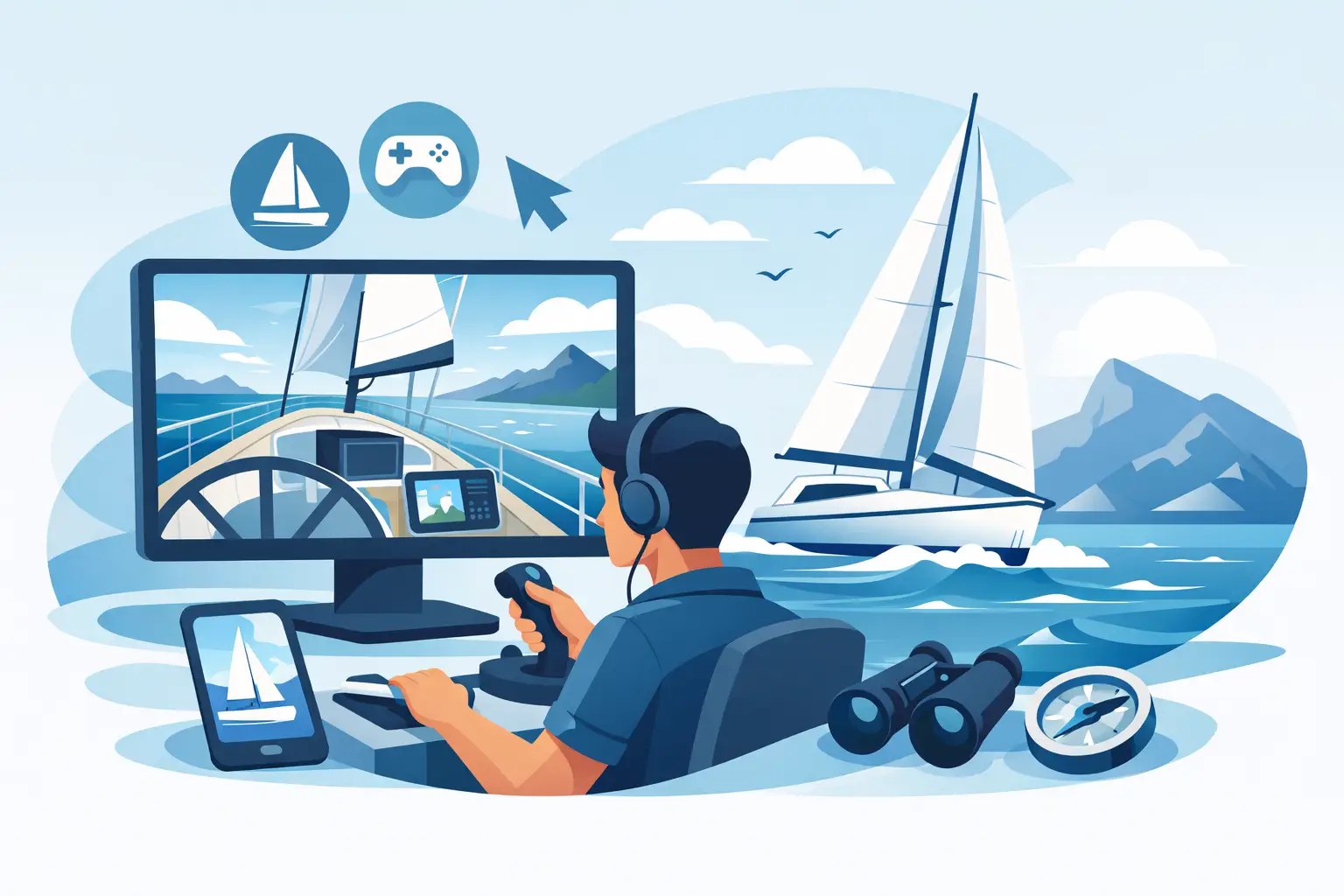
The best sailboat simulator It’s not just about showing a pretty boat on the screen. It needs to make you feel the consequences of every decision: point up too much and lose speed, ease off the sail at just the right moment, choose the wrong tack, or arrive late at the mark. If the goal is to truly learn or train, the question isn’t just which game seems more realistic. It’s which simulator turns wind, trimming, and strategy into a hands-on experience.
For anyone who wants to get into sailing without a club, their own boat, or a whole afternoon to spare, a browser-based simulator changes the game. You open it on your phone, tablet, or computer, set the boat in motion, and begin to realize something essential: sailing isn’t about heading toward a destination. It’s about working with the wind as it blows.
What Makes the Best Sailing Simulator
A useful sailing simulator needs to strike a balance between ease of use and realistic sailing behavior. If the physics are oversimplified, users will develop habits that don’t work on the water. If the controls are too complex even before the first outing, the tool will end up driving away exactly those who are just starting out.
The key is to allow anyone to take the helm quickly, while maintaining the balance that keeps a sailboat moving. The wind has a direction and intensity. The sail must be at the right angle to that wind. The hull heels when it’s under pressure. The helm changes course, but it can also slow the boat down if used excessively. And a gust isn’t just a visual effect—it demands a response.
That’s why detailed charts, on their own, don’t define quality. A spectacular sea can be impressive for a few minutes, but it doesn’t teach you how to trim the genoa, ease the mainsail, or understand why the boat lost speed after a course change. The best simulator shows you the cause before the result and invites you to try again.
Start with the wind, not the buttons
On a sailboat, the driving force behind the experience is the apparent wind. It is the wind that the boat perceives when it combines the true wind with its own speed and direction of travel. It may seem like a technical concept, but it becomes clear when you're sailing.
As you pick up speed, the apparent wind tends to shift forward. When you change course, it shifts in direction and angle. So the trim that worked when sailing across the wind may no longer work when sailing point up. The sail starts to flap, the boat loses fclose-hauled, and you need to adjust. There’s no need to memorize this before you go sailing: just watch it happen, adjust the sheet, and observe the response.
A good simulator should make this cycle visible. Accelerate on a favorable course, change direction, feel the sail lose power, and regain pressure. This is the kind of repetition that builds your repertoire. The first time, you react too late. Then, you start to anticipate the change before the boat slows down.
The master and the genoa must each have their own function
When the simulator allows you to adjust the mainsail and genoa, it makes sailing feel more realistic. The mainsail greatly influences the boat’s balance and the overall pressure on the mainsail. The genoa contributes to propulsion and requires attention depending on the course and wind strength.
It’s not enough to simply provide two independent controls. They must produce effects that are easy to understand. With the sails too tight on a broad reach, the boat can get stuck. With them too loose on the point up, it loses power. If a gust hits, easing off at the right moment can reduce heeling and keep the boat under control. It’s in this interplay between the wind, the sail, and the hull that learning takes place.
The rudder isn't meant to fix everything
Beginners often use the tiller like a car steering wheel: they realize they’ve strayed off course and turn it sharply to get back on track. On a sailboat, this maneuver can cost you speed. The larger and more abrupt the movement of the tiller, the greater the drag can be.
A well-designed simulator shows this price. Use smooth movements, stay the course Plan ahead and let the sails do their part. Once you realize that efficient sailing is less about correction and more about anticipation, racing takes on a whole new level.
Realism that helps, without becoming a barrier
There’s a difference between a deep simulation and an interface that hides the joy of sailing behind dozens of panels. To learn, every element needs to serve a clear purpose. Gusts, wind shifts, heeling, and rudder response are valuable because they influence your next decision.
A gust, for example, can cause the boat to speed up or heel over more, depending on the course and the sail trim. A roll can force you to adjust your course to maintain speed. A heel warns you that there is pressure on the sail, but it can also indicate too much power or poor boat positioning at that moment. When these behaviors occur consistently, the user stops pressing buttons at random.
Realism also has its practical limits. No screen can replace the physical sensation of balance, the sound of water, or the safety precautions on a real boat. But that doesn’t diminish the value of digital training. It trains your eye to recognize situations, reduces anxiety for beginners, and allows you to repeat a maneuver as many times as necessary.
A regatta is where technique makes the difference
Training alone teaches you how to sail. Competing in a regatta teaches you how to make choices. The start brings everyone closer together, opponents take up space, the next mark forces you to plan ahead, and the wind doesn’t just reward those who point their boat in the right direction.
In a timed race against bots, you can experiment without any social pressure. Try a more conservative start, compare your lines, mess up a turn, and try to figure out where you lost time. In live multiplayer, the game changes: you start reading your opponents, feel the pressure to hold your ground, and have an immediate urge to ask for a rematch.
Strategy isn't just about top speed. Sometimes, it's worth sailing a little farther to catch a better wind. Other times, sticking with a bad tack costs more than making an extra maneuver. The best sailing simulator needs to offer courses and opponents that make those choices matter.
On VelejAÍ, the transition from training to competition happens without any installation, mandatory registration, ads, or in-app purchases. You can join a free session, race against bots, or share a live race with friends. Hit the water, trim the sails, and see how a small decision near the starting line can determine the outcome.
How to Evaluate Before Making a Choice
Before calling any option the best, see if it performs well in certain practical situations. Does the boat accelerate and lose speed depending on its course? Do the sails require adjustment rather than functioning like an on/off switch? Do gusts and wind shifts create real choices? Is there room for both training and competition?
It’s also worth thinking about your goal. For a first-time experience, direct access through a browser and clear controls are key. For those who already sail, reading apparent wind, hull response, and the ability to repeat courses may be more important than visual effects. For groups of friends, an accessible multiplayer regatta is the feature that keeps them engaged after the first race.
Don’t look for a perfect replica of every detail of life on board. Look for a simulation that adheres to the principles of sailing and provides immediate feedback on your actions. If you’ve over-tacked, you need to feel the boat respond. If you’ve chosen the right tack, you need to gain ground. If you’ve made a mistake in a maneuver, you need to understand why.
Frequently Asked Questions About Sailing Simulators
Can you learn to sail just by using a simulator?
You can learn important fundamentals: course, apparent wind, basic sail trim, tacks, gybes, and racing strategy. Practice on the water is still necessary to develop balance, confidence, and situational awareness, but the simulator greatly shortens the gap between hearing a term and understanding what it means.
Does the sailing simulator work on a cell phone?
It works when the platform is designed for the browser and for different screen sizes. On a cell phone, the experience is geared toward quick sessions and practicing wind reading. On a computer, it may be more comfortable to monitor instruments and manage a long regatta. Ideally, you should be able to switch between the two depending on the situation.
Do I need to know nautical terms before I start?
No. Start by sailing, observe the wind direction, and try adjusting the sails. Terms like point up, beam, stern, mainsail, and genoa make more sense once you see the effect each one has on the boat.
The best first sail isn't the fastest or the most technical. It's the one where you realize the boat picked up speed because you read the wind, adjusted the sail, and chose your course with intention. From then on, every new gust becomes an invitation to do even better.