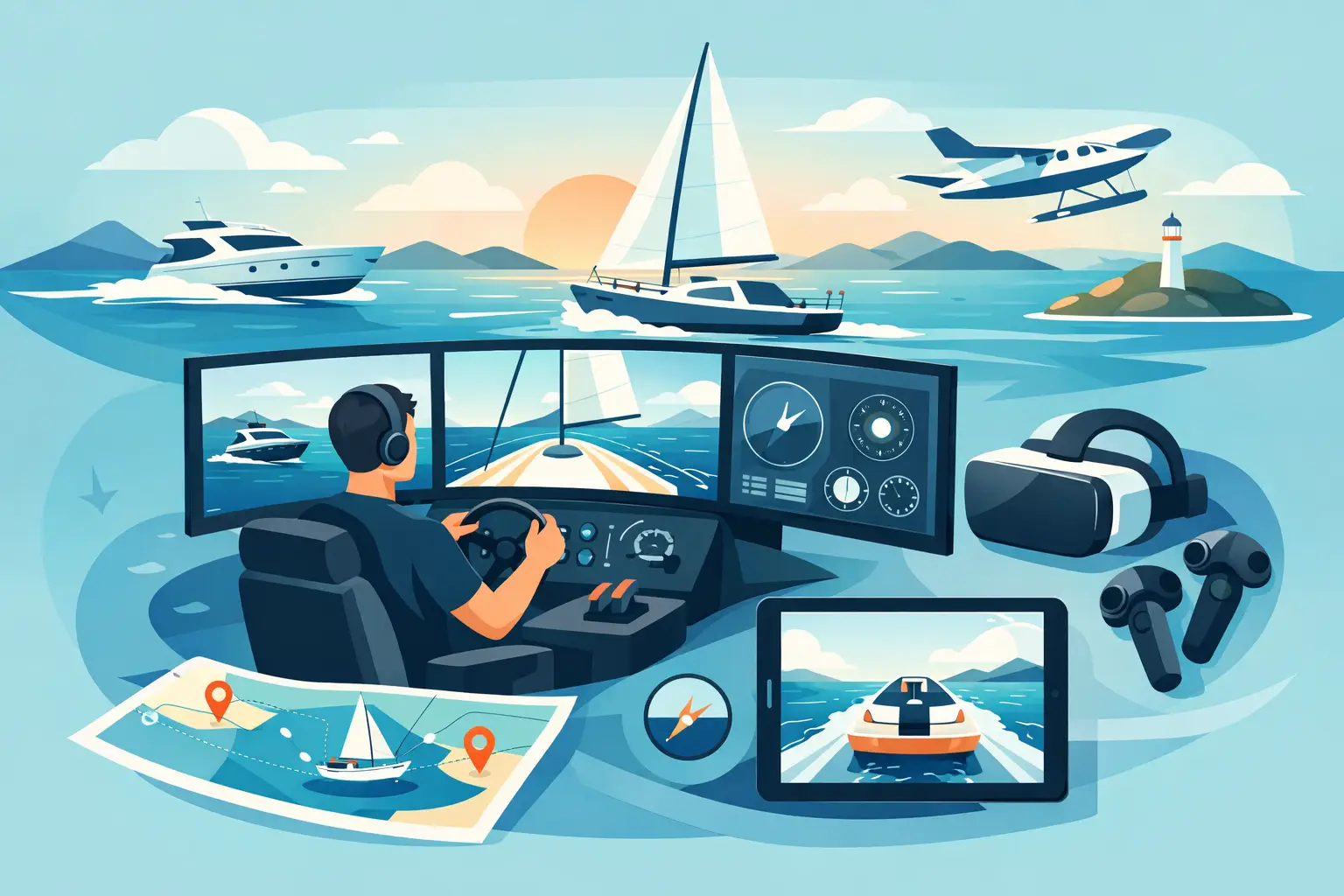
The first gust hits, the boat heels over, and the bow starts to veer off course. You can correct the course with the helm, trim the sail, or let the sailboat pick up speed before the next maneuver. It’s in these kinds of decisions that the best free nautical simulators They are no longer just a hobby: they demonstrate, in practice, what happens when the wind, the sails, and the hull work together.
For those who want to learn to sail If you don’t have a club, your own boat, or a whole afternoon to spare, simulation is a very practical way to get started. For those who already sail, it can serve as a quick workout between races. But not every sailing game teaches you how to sail. The right choice depends on what you want to experience on screen: steering a sailboat, understanding the wind, competing against others, or simply sailing through beautiful scenery.
What sets a boat game apart from a nautical simulator
A useful sailing simulator doesn't need to replicate every single bolt on a real boat. It needs to reproduce the relationships that affect the outcome of a sail. If the wind changes direction, the most efficient course must change as well. If you trim the main sail too much on an open course, the boat may heel over and lose balance. If you ease the trim at the right moment, it picks up speed.
This cause-and-effect logic is more valuable than detailed charts. A good simulator confronts you with the questions that arise out on the water: Where is the wind coming from? Which sail needs adjusting? Is it worth picking up speed before heading toward the buoy? Is it better to tack now or wait for a gust?
On the other hand, a more arcade-style sailing game tends to prioritize missions, breakneck speed, and simplified controls. That can be fun, and there’s nothing wrong with that. Just don’t expect it to teach you how to read apparent wind, trim a genoa, or develop a starting strategy.
How to Choose Among the Best Free Boating Simulators
Before opening any simulator, define your goal. If you’ve never been on a sailboat, you’ll need clear controls and easy-to-understand visual feedback. If you already know the basics, you’ll get more out of exploring sail adjustments, hull behavior, and courses with buoys. If you enjoy competition, look for simultaneous starts, a stopwatch, opponents, and the option for a rematch.
It’s also worth noting how the free model works. Some products are free to start with, but they restrict ships, tracks, or game modes. Others require registration, installation, or in-app purchases. Then there are those that run directly in the browser and let you play without creating an account. No single model is automatically better, but the barrier to entry affects how often you’ll practice.
Finally, test the physics with a simple maneuver. Sail on a broad reach, trim the sail a little, and see if the boat responds. Then change course and notice if the sail stops working properly. Perform a jibe. If the simulator clearly shows why the sailboat accelerated, lost speed, or heeled over, it has educational value.
The simulator profiles most worth your time
3D sailing simulator in your browser
This is the best way to learn by doing. You see the boat’s position, feel the change in heel, and realize that the tiller and sails aren’t isolated controls. The rudder points the hull, but the sail must be at the right angle to the wind. If these two actions conflict, the sailboat won’t perform as you expect.
VelejAÍ fits this description by bringing a 3D sailing experience to the browser—no installation, no mandatory registration, no ads, and no in-app purchases. The concept is simple: jump into the water, choose a course, and adjust Mestra and Genoa and observe the results. Steady wind, gusts, roll, apparent wind, rudder response, and heel transform concepts that seem abstract into visible reactions of the boat.
For beginners, the benefit is being able to make mistakes without any cost. You can sail into a gust with the sail too tight, feel the hull heel, and try again. For sailors, the value lies in the details: anticipating a change in course, choosing the right moment to ease off, and finding a more efficient trim before rounding the mark.
Online virtual sailing race platforms
There are simulators focused primarily on competition. In these, the race is at the heart of the experience: getting off to a good start, protecting the windward side of the course, covering an opponent, and planning the approach to the mark. Some international platforms, such as Virtual Regatta, have built large communities around this format and may be of interest to those who want to compare tactical decisions with other players.
The key point is that the experience varies depending on the mode you choose. In some cases, sail control is simpler, and progress depends more on the route and strategy than on precise boat handling. In others, additional features may be tied to paid accounts or in-app purchases. It’s a good option for those who already understand the basics and want to feel the pressure of a crowded start, but it may not be the most direct way to discover the effect of each adjustment.
Vessel Navigation and Maneuvering Simulators
Another group covers experiences related to general navigation: docking, operating an engine, reading instruments, planning routes, and handling different types of boats. These experiences can be helpful for anyone interested in marinas, canals, and navigation procedures, especially in low-speed situations.
The trade-off here is clear. These simulators teach positioning and planning, but they don’t always delve deeply into sailing. If your goal is to learn why a boat doesn’t point directly into the wind or how to take advantage of a gust, look for an environment where sails are a central part of the physics, not just decoration.
Water sports inspired by sailing
There are also games that use sailboats as their theme, but they reduce sailing to a single “accelerate” button or a fixed direction. They can be a lighthearted way to spark curiosity—especially on a cell phone—but they rarely develop nautical skills. Use them for entertainment, not as a guide for a first sailing lesson.
What to Work On in a 15-Minute Workout
You don't need to set aside hours to improve. A short session goes a long way when you stay focused. Start by sailing in a straight line, and try adjusting the sails with small movements. Notice when the boat picks up speed, when it heels too much, and when it loses speed.
Next, sail the same course using different amounts of helm. Too much helm slows the boat down and increases drag. Too little helm can cause the bow to drift off course. The goal isn’t to memorize a perfect position, because the adjustment changes depending on the wind and the course. The goal is to understand how the boat responds.
In the next session, place an imaginary buoy or use a course from the simulator itself. Approach from both sides, compare the angles, and perform a tack before the finish line. In a regatta, a few extra meters or a slow exit from the maneuver can cost you positions. When this appears on the screen, the strategy is no longer just theory.
If there are bots or live matches, use them once you’ve figured out the controls. Competing early on is fun, but it can get in the way of learning if you’re just trying to keep up with others. First, get the boat to respond to the wind. Then compete for the lead at the start, pick a side, and call your friends for a rematch.
"Free" shouldn't mean "shallow"
A free simulator can be enough to build a solid foundation, as long as it provides clear feedback. You don’t need a cockpit full of instruments to learn that a gust demands your attention, that the apparent wind changes as you accelerate, and that a poorly trimmed sail causes you to lose speed. You need an environment that makes these relationships obvious and encourages you to try again.
To make the right choice, go for the experience that reduces friction and boosts engagement. If it loads quickly on your phone, tablet, or computer, you’ll be more likely to use it more often. If it lets you enter a regatta without setting up a whole operation, the competition becomes within reach. And if every mistake visually explains what went wrong, your next sail will start with a broader repertoire.
Real water remains irreplaceable: it offers waves, the cold, communication with the crew, and variables that no screen can fully replicate. Still, a good simulator shortens the path to that moment. Adjust the sails, test the course, and let the next gust teach you something.